
We have used a neural network for vehicle detection. An SSD network is used to recognize cars, trucks, bicycles and pedestrians in a grey scale environment without impairing speed or accuracy.
news
BitSim’s Andrea Leopardi gave a well attended presentation at the FPGA days in Stockholm regarding Accelerated (Embedded) Image Processing.
For you who have attended our talk, we hope you got exciting insights to accelerate the development of your next project on embedded systems.
For all the others, check our article here.

CERN, the research faciility in Switzerland and Zenuity, a new ADAS and AD Software Company owned by Volvo and Autoliv, have announced a collaboration on machine learning based on hardware acceleration. This is exactly the area we at BitSims are exploring with our new platform Spiderpig. The idea is utilize existing libraries and the Python language to quickly develop areas such as advanced object recognition and machine learning applications. See here
This announcment from CERN and Zenuity underscores the opportunities we at BitSim see in acceleration of machine learning in hardware. Read further

 Meet us at Embedded Conference Scandinavia – Europe´s largest embedded conference November 5-6 2019 , Kistamässan both number 36 in Stockholm.
Come and discuss Camera sensors and interfaces (MIPI CSI-2), edge computing and accelerated image processing, and snakes.
Presentation – How to accelerate the development of your embedded visions system.

Meet us at FPGAworld exhibition in Stockholm September 17, and Copenhagen September 19.
Come and discuss Camera sensors and interfaces (MIPI CSI-2), edge computing and accelerated image processing, and snakes.
Presentation – How to accelerate the development of your embedded visions system.
Stockholm 13.45-14-45
Copenhagen 13.30-14.30

If your application needs near real-time processing or low-latency performances, the concept of a distributed platform or Edge Computing may be a better choise. It may also offer lower operational costs and reduce traffic on the network.
We have taken our first steps on the new MIPI A-PHY specification, aiming for the automotive industry. Ethernet is becoming strong in vehicles but it isn’t suitable for every application since there may be unpredictability in the transmission time or latency when streaming some data from a sensor to the “processor”. The A-PHY support real high-speed data streaming both from the sensors to the “processor” and to the displays.

 Read more here
To efficiently transfer large amount of data and off-load the embedded processor, BitSim is offering its IP core, Bit-1G-UDP Ethernet.
This core offloads an embedded processor with the communication accelerated in the FPGA, with more than ~900+ Mb/s of effective data transfer rate. Standard functions for transmit, receive, ARP-handling, AXI-stream and loop back are included.

BitSim is a member of the MIPI Alliance (www.mipi.org), an influential standardization organization within the mobile industry which has successfully developed a number of industry standards for various well-used and established interfaces for camera sensors, displays, storage, power and audio etc.
For some time, a collaboration has been initiated by companies active in the automotive industry, with both car manufacturers and subcontractors to enhance existing or develop new interface specifications for automotive applications.
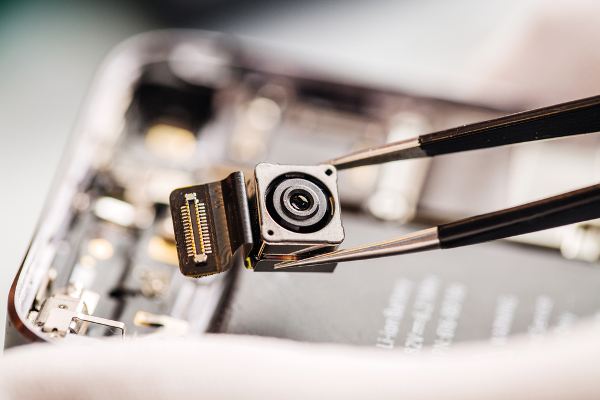
For short distances in camera applications, MIPI CSI-2 is already used in the automotive industry. BitSim has its own IP block, Bit-MIPI CSI-2, used by customers in different industry segments.
Now, this cooperation will cover solutions for longer distances, up to 15 m, for camera and radar sensors.
Since there will be up to eight cameras in modern cars in the near future, the 40 cm that MIPI CSI-2 can handle today is not enough.